
Inflammatory bowel disease (IBD) affects millions of people worldwide. Yet despite advances in treatment, the precise mechanisms driving chronic intestinal inflammation and disease progression remain poorly understood. Current therapies primarily focus on managing symptoms, while key questions, such as why the disease becomes more severe in some patients or what increases the risk of colorectal cancer, remain unanswered.
A major obstacle to IBD research has been the lack of an experimental model capable of accurately replicating the human intestine. Conventional cell cultures capture only limited aspects of the disease, while animal models often fail to reflect the complexity of the human gut. As a result, researchers have struggled to study the interactions between different cell types and their roles in inflammation, tissue damage, and cancer development.
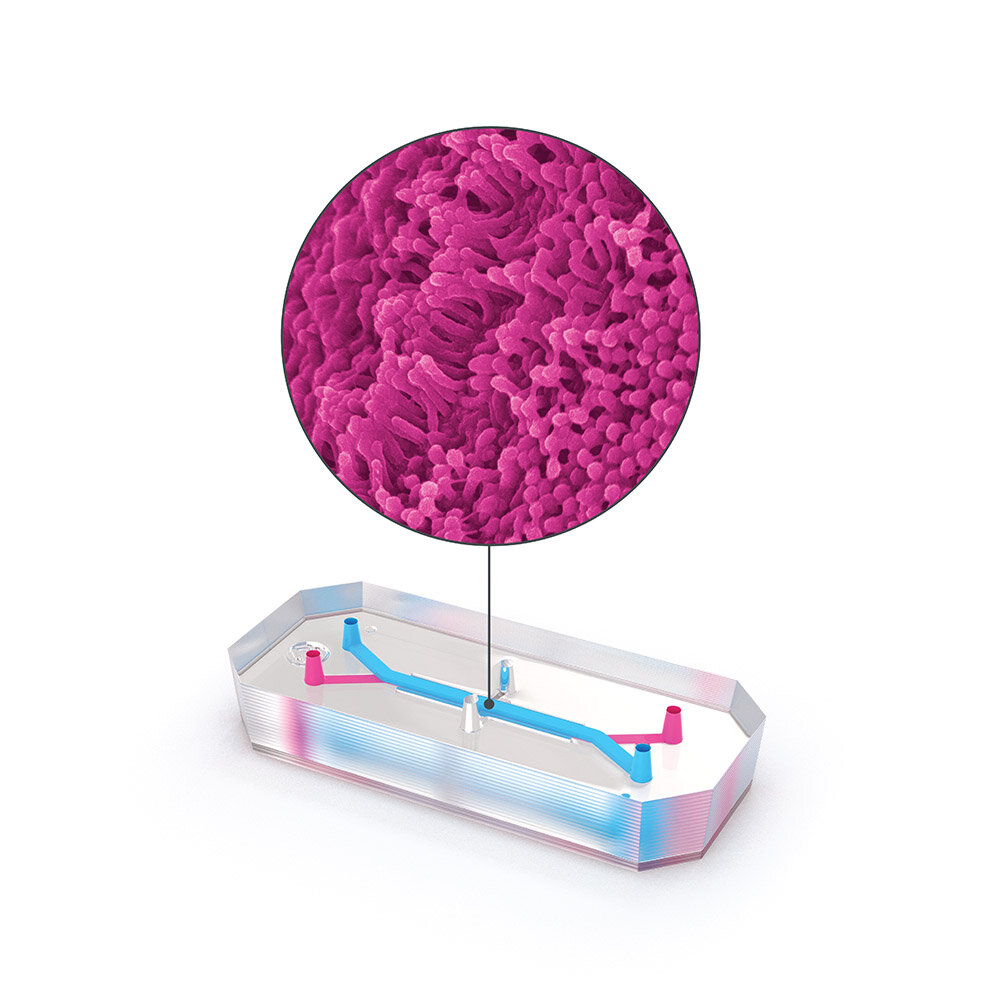
Now, researchers at Harvard University have developed what they describe as the most comprehensive laboratory model of IBD to date. Their findings, published in Nature Biomedical Engineering, introduce a Colon Chip, an organ-on-a-chip platform that closely recreates the human intestinal environment.
The device is built using cells donated by patients with the two main forms of IBD: Crohn’s disease and ulcerative colitis. Unlike conventional laboratory models, the Colon Chip simultaneously incorporates intestinal epithelial cells, immune cells, connective tissue cells, and even the mechanical forces generated by natural intestinal movements, providing a far more realistic representation of the human colon.
One of the study’s most significant discoveries was the unexpected role of fibroblasts. Previously regarded mainly as structural cells responsible for tissue repair and maintaining organ architecture, fibroblasts were found to actively promote inflammation and weaken the intestine’s protective barrier.
To investigate this effect, researchers cultured fibroblasts isolated from patients with IBD alongside healthy intestinal cells from the same individuals on the chip. Remarkably, the presence of these fibroblasts alone was enough to trigger disease-like behavior in otherwise healthy cells, increasing intestinal permeability and significantly amplifying inflammatory responses.
According to the researchers, these findings suggest that fibroblasts play a much more important role in the onset and progression of IBD than previously recognized, a mechanism that earlier laboratory models were unable to reveal.
Another key feature of the Colon Chip is its ability to simulate the intestine’s natural movements. By applying mechanical forces that mimic intestinal contractions, the researchers found that these movements intensified inflammation and accelerated processes associated with fibrosis, or scar tissue formation, a phenomenon that had previously been difficult to study under laboratory conditions.
The platform also enabled researchers to examine the effects of pregnancy-related hormones on IBD. When these hormones were introduced into chips constructed from female patients’ cells, inflammation increased and collagen deposition, a hallmark of fibrosis, became more pronounced. The findings may help explain why some women experience worsening IBD symptoms during pregnancy.
Beyond inflammation, the Colon Chip was used to investigate the earliest stages of colorectal cancer development. When healthy and diseased tissues were exposed to a carcinogenic compound, cells derived from patients with IBD exhibited cancer-associated molecular changes much earlier than healthy tissue.
The study also demonstrated that fibroblasts play a crucial role in increasing cancer susceptibility. Healthy intestinal cells developed early cancer biomarkers only when they were cultured alongside fibroblasts obtained from patients with IBD.
According to the research team, the greatest strength of the Colon Chip lies in its ability to faithfully recreate the human intestinal microenvironment while allowing scientists to isolate and study multiple disease-driving factors simultaneously. This capability could improve understanding of IBD progression, identify new therapeutic targets, and enable more accurate preclinical testing of potential treatments.
The researchers emphasize that the Colon Chip is more than a disease model. It provides an unprecedented platform for studying the molecular events that initiate intestinal inflammation and the earliest stages of colorectal cancer in human tissue, an advance that could transform IBD research and accelerate the development of personalized therapies.
Re: S.C.I