
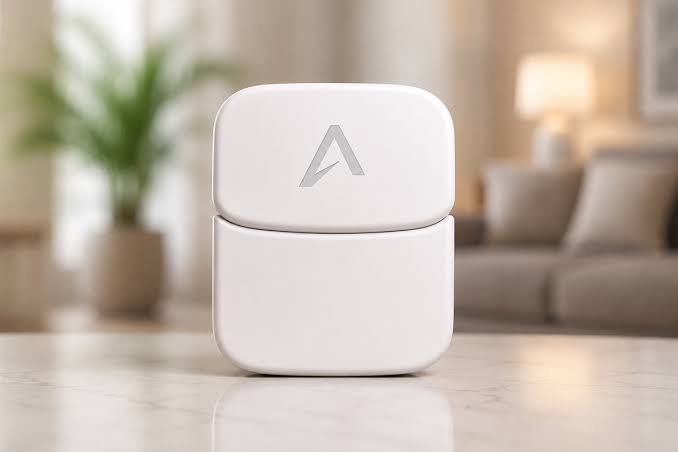
The success of continuous glucose monitoring (CGM) sensors over the past few years has paved the way for a new generation of wearable technologies. These devices are no longer limited to tracking blood glucose but are increasingly being designed to continuously monitor a broader range of biological markers. U.S.-based startup Adaptyx Biosciences has now announced a new technology capable of continuously measuring cortisol, a hormone that plays a central role in regulating the body’s response to stress, metabolism, immune function, blood pressure, and the sleep–wake cycle.
The company presented preliminary findings on its technology at the American Diabetes Association (ADA) Annual Scientific Sessions. According to the researchers, the smart patch is the first device capable of continuously measuring free cortisol in the interstitial fluid beneath the skin. Unlike conventional blood tests, the system enables real-time hormone monitoring without the need for repeated blood sampling.
Roughly the size of a matchbook, the adhesive patch is worn directly on the skin. It contains an array of biosensors that use aptamer technology, short synthetic DNA strands engineered to bind specifically to cortisol molecules. When cortisol binds to these aptamers, it produces tiny electrical changes that are detected by the sensor and converted into measurable digital signals.
Researchers reported encouraging performance in early studies. In one experiment, volunteers were administered hydrocortisone, and the patch tracked changes in cortisol levels almost simultaneously with standard laboratory blood tests. In another study, the device successfully captured the body’s natural circadian fluctuations in cortisol, including nighttime declines, the characteristic morning surge after waking, and hormone changes associated with sleep deprivation and alcohol consumption.
Although these studies remain preliminary and involved relatively small numbers of participants, experts consider the findings an important step toward the development of multi-analyte wearable biosensors. One of the longstanding challenges in this field has been maintaining sensor accuracy during prolonged real-world use, a hurdle that researchers believe recent advances in aptamer technology have significantly reduced.
The first clinical application of the technology is expected to be in patients with adrenal disorders. For example, individuals with Addison’s disease, who cannot produce sufficient cortisol, require lifelong hormone replacement therapy. Continuous cortisol monitoring could help optimize medication dosing while reducing treatment-related complications.
However, researchers believe the largest commercial opportunity may lie in type 2 diabetes. Estimates suggest that approximately one-quarter of patients with difficult-to-control blood glucose levels have occult hypercortisolism, a condition in which elevated cortisol contributes to persistent hyperglycemia. Continuous cortisol monitoring could therefore help identify the underlying cause of poor glycemic control and support more personalized treatment strategies.
Importantly, the platform is not limited to cortisol measurement. Because each sensor can be reprogrammed simply by replacing the aptamer, the technology could potentially detect a wide range of biomarkers, including creatinine as an indicator of kidney function and several hormones associated with reproductive health. The long-term vision is to develop a wearable platform capable of continuously monitoring multiple hormones and metabolites simultaneously, providing a more comprehensive picture of an individual’s physiological state.
Adaptyx is not alone in pursuing this goal. Several companies are developing wearable sensors targeting reproductive hormones, while others have introduced cortisol sensors that analyze sweat. Nevertheless, researchers argue that measuring cortisol in interstitial fluid provides greater accuracy than sweat-based measurements because it more closely reflects circulating hormone concentrations within the body.
At the same time, wearable health technology companies continue expanding the capabilities of smartwatches and fitness trackers. Current devices estimate stress indirectly using physiological signals such as heart rate, heart rate variability, and skin temperature. Adaptyx’s technology could become one of the first wearable systems to directly measure the body’s primary stress hormone, potentially opening a new chapter in digital health wearables if it ultimately receives regulatory approval.
Despite the technological breakthrough, researchers caution that it remains unclear whether continuous cortisol monitoring in healthy individuals will meaningfully improve health outcomes or influence clinical decision-making. Consequently, while the technology represents a significant engineering advance, its broader clinical value will need to be demonstrated through larger clinical trials and long-term validation studies.
Re: S.I