
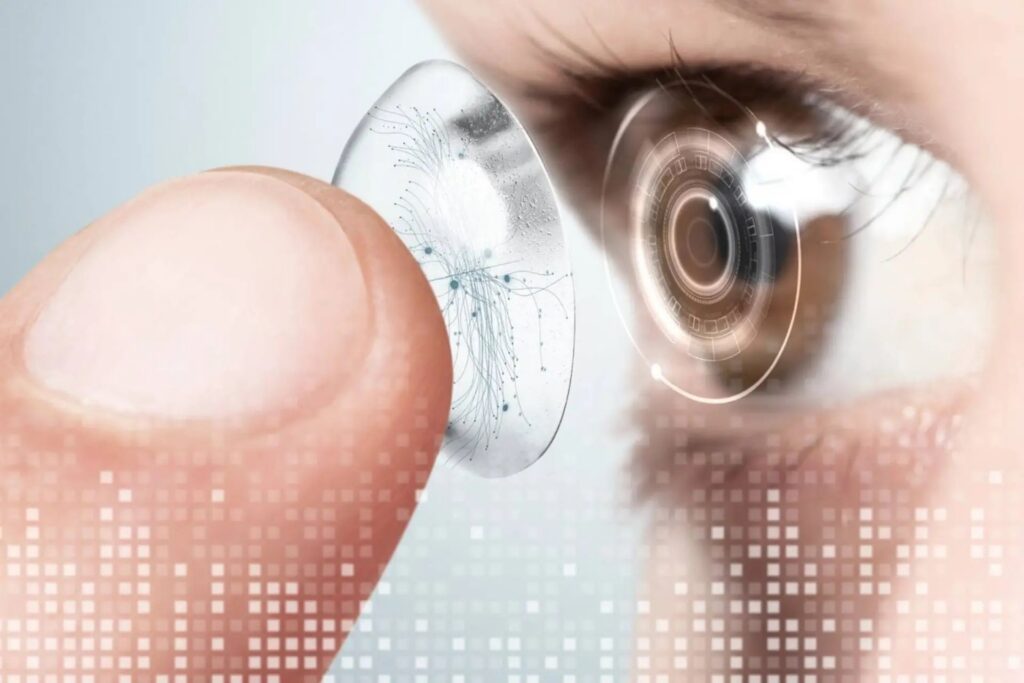
3D printing continues to expand its role in healthcare, with researchers at the University of Waterloo introducing a novel method for producing personalized contact lenses in less than 20 minutes—from digital design to final fabrication.
The process begins with creating a digital model based on detailed measurements of the patient’s cornea. The inner surface of the lens is customized to match the individual’s unique eye anatomy, while the outer surface is engineered to provide the required optical correction. This approach enables truly patient-specific lenses that offer both comfort and improved visual performance.
The technology is particularly promising for people with irregular corneas, who often face limited treatment options and must choose between comfort and clear vision. Traditional custom-made lenses can also be expensive and require multiple clinical visits before delivery.
One of the project’s biggest challenges was developing a material suitable for 3D printing. The research team formulated a new hydrophilic silicone that can be printed layer by layer while maintaining the essential properties of contact lenses, including oxygen permeability, flexibility, and biocompatibility.
To address the microscopic surface imperfections typically created during 3D printing, the researchers also applied an ultra-thin coating that smooths the lens surface without altering its shape or optical performance.
Initial laboratory testing showed that the printed lenses demonstrate optical quality, mechanical strength, and biocompatibility comparable to commercially available contact lenses. The team is now preparing for larger human clinical studies and pursuing patent protection as the next steps toward commercialization.
If successfully brought to market, this technology could significantly reduce the time and cost of manufacturing custom contact lenses while advancing the broader adoption of personalized medical devices in eye care.
Re: N.A