
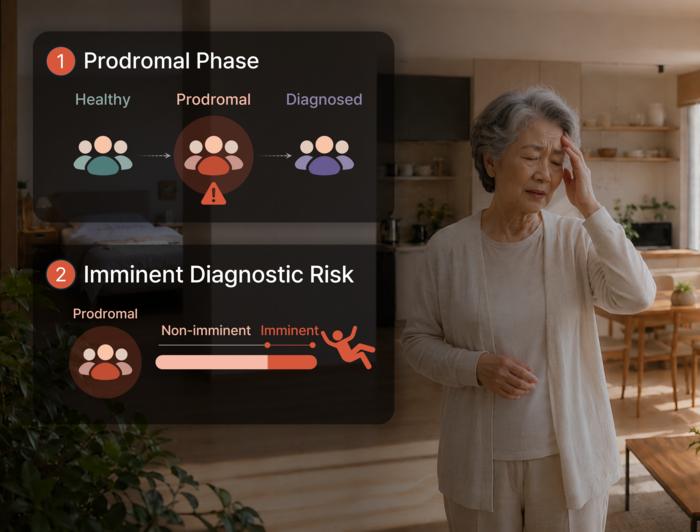
Cerebrovascular diseases, including stroke, are often diagnosed only after serious symptoms appear. However, researchers in South Korea have developed a new AI-based approach that enables earlier detection of disease risk by analyzing subtle changes in individuals’ daily behaviors. The technology could help identify people at higher risk before noticeable symptoms develop.
A research team from KAIST, together with researchers from Sungkyunkwan University and Korea University Anam Hospital, has developed an artificial intelligence framework that uses data collected from the daily lives of older adults at home to assess the prodromal stage of cerebrovascular disease and determine whether a diagnosis may be approaching.
The study was based on digital lifelog data from 1,224 older adults. Researchers analyzed more than 13,000 two-week lifelog samples containing information on daily activities, sleep patterns, circadian rhythms, indoor environmental conditions, and health-related data to identify behavioral changes associated with increased disease risk.
The findings showed that small changes in lifestyle patterns could serve as early indicators of disease progression, changes that may not be easily detected through conventional medical examinations. The AI system successfully distinguished the four-week period before diagnosis from normal periods with an accuracy of 96.53%.
To improve transparency and understand how the AI model reaches its conclusions, the researchers incorporated explainable artificial intelligence (XAI) techniques. The analysis revealed that older adults in the early risk stage of cerebrovascular disease were more likely to experience disruptions in their normal daily rhythms, including prolonged activity late at night, delayed sleep onset, and reduced differences between daytime and nighttime activity patterns.
The researchers also found that as diagnosis approached, individuals showed reduced continuous activity during evening hours, increased inactive periods, and changes in indoor environmental conditions, such as lower humidity levels. These findings suggest that everyday lifestyle data can become valuable indicators for continuous health monitoring.
Researchers believe this technology could eventually serve as a digital health tool for monitoring older adults, particularly those who may have difficulty clearly communicating changes in their physical condition. The system could help healthcare providers and caregivers identify high-risk individuals earlier and initiate preventive interventions.
However, the researchers emphasized that the technology is not a replacement for medical diagnosis and cannot predict the exact timing of a stroke. Instead, it is designed to provide early warning signals and support better decision-making regarding timely medical consultation.
Professor Lisa Lim from KAIST, who led the research, stated that the goal of the technology is not to replace doctors with artificial intelligence, but to use AI’s ability to detect subtle changes in everyday life and help connect individuals with appropriate medical care at the right time.
Re: NA