
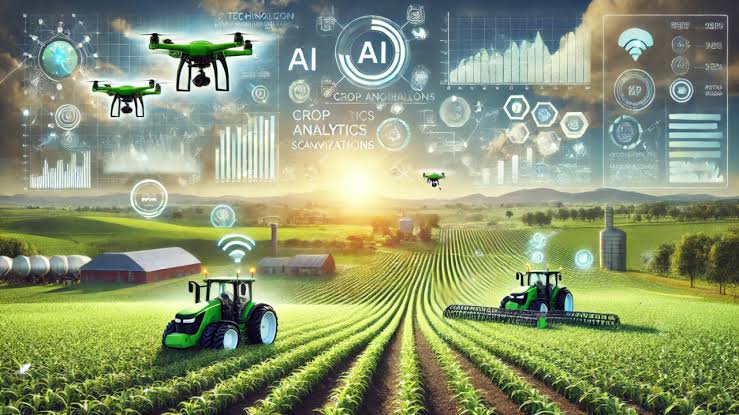
The idea of artificial intelligence operating in the field may still seem unusual to many people, but the technology is rapidly entering agriculture. UK-based Phytoform is partnering with two major global seed companies to use AI in designing corn varieties with improved performance and greater resilience.
The collaboration involves U.S.-based Beck’s Hybrids and international agricultural company RAGT, two organizations with decades of experience in seed development and crop improvement. The goal of the project is to optimize corn plant structures so they can grow more efficiently, capture more sunlight, and use resources such as water and nutrients more effectively.
Corn is one of the world’s most important crops, serving as a key source for food, animal feed, and biofuels. However, the crop is facing growing pressures from rising temperatures, resource shortages, plant diseases, and increasing production costs, creating new challenges for farmers.
Research suggests that every 1°C increase in global temperatures could reduce corn yields by around 7.4%. As a result, scientists and agricultural companies are seeking new approaches to prepare crops for future climate conditions.
Phytoform’s technology uses AI to identify small genetic variations within plants that could produce beneficial traits, including improved growth, more efficient nutrient use, and greater resistance to heat and drought.
The company emphasizes that the goal is not to create entirely new plants, but rather to precisely adjust existing traits within crops. This approach differs from some traditional genetic modification techniques because it aims to improve plant performance without introducing foreign DNA.
In this process, AI acts as a powerful research assistant by analyzing vast amounts of genetic data and helping scientists identify potentially valuable changes more quickly. However, all resulting plant improvements must still be tested under real-world field conditions.
William Pelton, CEO of Phytoform, says that despite the growing capabilities of AI, researchers cannot simply rely on an AI model to create a crop and immediately deploy it on farms. Every genetic change must be evaluated in real agricultural environments to determine whether the plant actually delivers improved performance.
Once successful results are confirmed, seed companies can incorporate the technology into their breeding programs and introduce improved varieties to the market.
The project initially targets major agricultural markets, including the United States, South America, and potentially Europe. Beck’s operates in key corn-growing regions of the U.S., while RAGT has a presence across dozens of countries worldwide.
Phytoform’s ambitions extend beyond corn. The company says its AI-driven technology could eventually be applied to other crops, including tomatoes and additional plant species.
The growing role of artificial intelligence in agriculture highlights a broader shift in food production: the future may not depend solely on expanding farmland or increasing resource use, but on using advanced technologies to help farmers produce more resilient crops with the resources already available.
Re: A.G.N